

10 practical lessons I learned self-publishing my first book
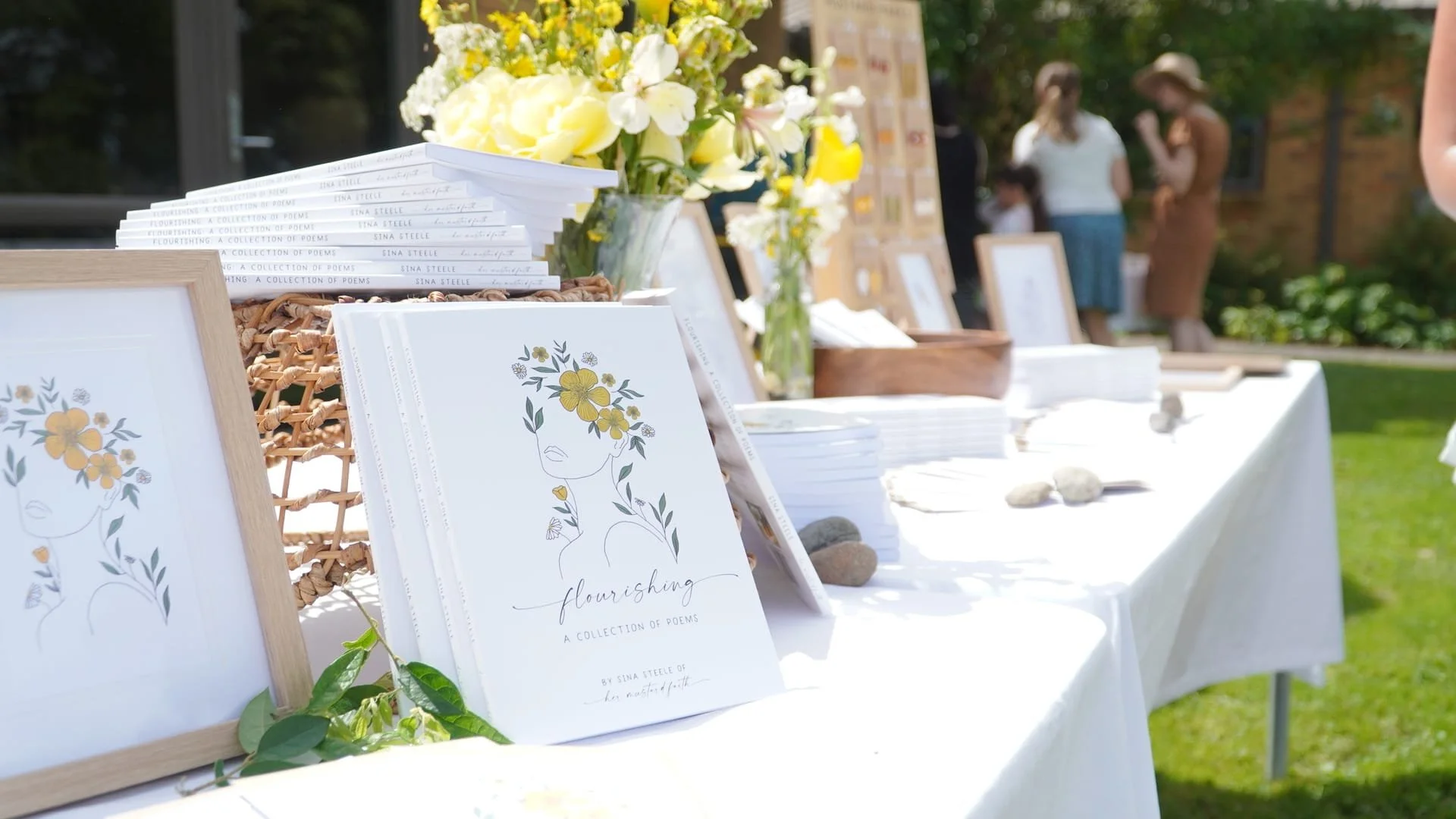
Photo from my book launch for Flourishing: A collection of poems
When I self-published my first poetry book, I thought the hardest part would be writing it.
Turns out, there were many other hard parts along the way. Most of the challenges came after the writing—the editing, illustrating, formatting, cover design, pricing, printing, uploading files to self-publishing platforms, and trying to navigate all the different publishing platforms involved in publishing a book.
If you’re thinking about self-publishing, here are ten practical lessons I learned in my book publishing journey that I hope will help you in yours. It really is quite special and surreal holding your published book in your hands for the first time, after all the planning and prayers that have gone into it, and I wish you all the very best in your journey of releasing a book into the world.
1. Finish the manuscript before worrying about publishing details
I spent way too much time worrying about things like cover ideas, event promotion, and printing options before I’d even finished writing the book. These are all great things to plan towards, but the most important thing is to complete the manuscript. Your book will evolve during the writing process, so any early decisions you make will likely need to change anyway. Focus on getting the words written before trying to perfect all the other details.
2. Editing your book takes more time than expected
I underestimated how much time good editing requires, as well as the different types of editing available. Depending on your book, you may need varying degrees of the following types of editing:
development edits (for structure and flow)
line editing (for sentence clarity)
proofreading (for grammar and punctuation)
final formatting checks
Whether you choose to engage a professional editor or not, I recommend self-editing your book as much as you can. If your budget allows, I would also recommend investing in an editor or proofreader so your published book can be as polished as possible.
3. Formatting matters more than most new authors realise
Even a beautiful book can feel unprofessional if the formatting is inconsistent. Things I learned to pay attention to (which felt painstakingly meticulous during the process):
paragraph and line spacing,
margins,
chapter headings (or in my case, poem titles),
page numbers,
font consistency,
the use of whitespace.
When I was writing my poetry book, I figured out early on what size paper I planned on using, and set up my document to match. You don’t have to do this—writing in a word document is fine during the process. I did this because I had Adobe InDesign at the time and knew how I wanted my book to be set up.
If you’re self-publishing through Amazon KDP or IngramSpark, it’s worth downloading their templates before you start the formatting process.
4. Your book cover matters more than you think
The old saying “Don’t judge a book by its cover” is great advice but utterly untrue in the book world—people absolutely do judge books by their covers. And so they should—covers are not simply decorations but communicate to your audience important things like genre, tone, and book quality. A few things that may help:
look at bestselling books in your niche,
choose simplicity and readability over cluttered designs,
make sure the cover looks good as a thumbnail, especially if you intend to sell online.
You don’t necessarily need an expensive designer, but a clean and professional cover makes a huge difference. If you are designing your own cover, ensure you are using images and fonts you have the rights to use.
5. Get a physical proof copy before publishing
No matter how carefully you proofread on a screen, you will notice different things once you hold your book in your hands. When I ordered my proof copy, I noticed:
spacing issues,
illustration placements that needed changing,
how much margin space was actually needed,
and small formatting inconsistencies that I had missed digitally.
A proof copy will also show you what your cover looks and feels like, and how the colours print. Printers these days will offer a digital proof, but I highly recommend getting a physical proof as well—it is so worth the extra time and cost.
6. Book marketing starts before your launch
I notice a lot of people write a book and then start thinking about how they can market it. I think it works much better if you do it the other way around. For me, my journey into writing a book was a bit backwards, and I actually built an audience (unintentionally) long before I wrote my book. I didn’t tell many people I was writing a book, but when it came time to launch, I already had an audience who knew and trusted me and my words. Some things that helped in marketing:
sharing behind-the-scenes content,
sharing snippets and quotes from the book,
sharing the heart behind it.
One thing I’ve learned in sharing my words publicly is that people connect with stories and real people, and this is as important as the finished product.
7. You don’t need a huge audience to start
It can help but it absolutely is not necessary. Starting small is fine, and it is more about the quality of your audience than the quantity. A smaller audience that genuinely connects with your work is far more valuable than large numbers with low engagement. When I first started sharing my words on social media, my audience grew quickly, and I do think there is something to be said of social proof, but at the end of the day quality trumps quantity.
Don’t underestimate the support of people in your real life as well. I was overwhelmed with the support from people—friends, family, and acquaintances—and this made all the difference in launching my book into the world.
8. Don’t be afraid to ask
After I had decided on having a physical launch and was sending invites out to people, I decided to message the national Christian television and radio channels in New Zealand. I didn’t really have any expectations, but I had nothing to lose. I sent them a short brief and my social media links (this is one situation where social proof did help), and they got back to me straight away inviting me on their shows. This earned media (publicity and exposure that I did not have to pay for) was a really valuable part of my marketing, and I encourage you to think of ways you may be able to gain traction with your book through earned media rather than using paid advertising.
9. Self-publishing a book means learning business skills
When I self-published my book, it involved so much more than just writing it. I also had to learn things like:
pricing for retail and wholesale,
branding,
customer communications,
social media marketing,
e-commerce web development,
event management,
bookkeeping,
and public relations.
At first, this can feel intimidating if you are unfamiliar with small business management, but over time you learn so many important skills. Of course, you can pay others for services that you cannot or do not want to do yourself, but if you’re anything like me, you may have either an entrepreneurial streak in you, or a very limited budget (or both!).
10. Celebrate your book—you deserve it!
My final point is to take the time to celebrate your book, and recognise what an achievement it is. After I wrote my book, I was quietly proud of myself, but I didn’t want to make a big deal of it. But I noticed that people were so encouraging, and I learned how many people want to write a book but have not worked up the bravery to do it. So just the fact that you have followed through on your dream to write a book speaks volumes. So celebrate it—you deserve it!
I planned a big launch for my book, and my community gathered and showed up in a big way. It was such a special day—friends volunteered to do live music, photography, flowers, food preparation and serving, speeches, set up and pack down, ticket management, and sales—and I can tell you it felt like we were all celebrating my book. If you can do a book launch event, even a small one, I encourage you to do that. My book launches have been some of my favourite days ever.
If you have made it this far, you are likely very serious about publishing your book—congratulations! My biggest advice to you would be to start before you feel fully ready, learn as you go, and don’t let perfection stop you from achieving a goal that so many people want but aren’t willing to do the work for.
Every published author started with a first draft, a lot of unanswered questions and fears, but the bravery to commit to the process and follow it through. I would love to hear about the book on your heart—feel free to contact me and say hi! You can also find my poetry books here, find out about a Christian Writers Retreat in Spain, or sign up to my newsletter to be the first to receive updates.
If this post resonated with you, I'd love for you to join my newsletter—I occasionally share writing and updates on all things Her Mustard Faith straight to your inbox.